If you run or work in an architecture firm, you already know that great design alone isn’t enough to keep projects flowing. The firms that consistently win work aren’t just talented, they’re intentional about how they attract, nurture, and convert opportunities.
That’s where business development for architecture firms comes in. Done right, it’s not about aggressive selling or chasing every lead. It’s about positioning your firm, building trust, and creating a steady pipeline of projects that actually align with your expertise.
In this guide, we’ll break down practical strategies you can implement immediately, backed by industry data and real-world insight.
Business Development for Architecture Firms: What It Really Means
Business development for architecture firms is often misunderstood. It’s not just networking events or sending proposals. It’s the full system behind how your firm generates demand, builds relationships, and wins projects over time. At its core, it includes:
- Marketing (visibility and positioning)
- Sales (converting opportunities into projects)
- Relationship-building (clients, developers, consultants)
- Strategic partnerships
Recent industry data highlights just how important this is. The AIA/Deltek Architecture Billings Index® (ABI) dropped to 43.8 in January 2026, down from 47.1 in December, indicating that more firms are seeing a decline in billings as the industry heads into 2026.
This kind of contraction reinforces a simple reality: firms that rely solely on incoming work are more vulnerable during downturns. Consistent, proactive business development isn’t optional, it’s what keeps your pipeline stable when market conditions shift.
Why Most Architecture Firms Struggle with Growth
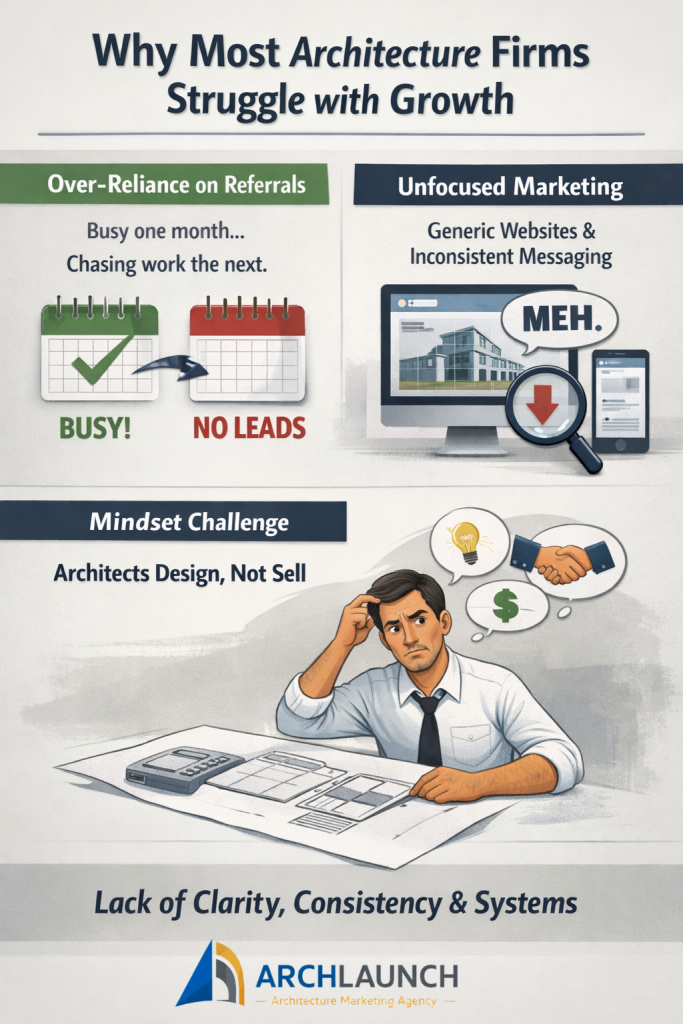
Before diving into marketing strategies, it’s worth addressing why business development for architecture firms often falls short. Many firms rely heavily on referrals. While referrals are valuable, they’re unpredictable. One month you’re busy, the next you’re chasing work.
Others invest in marketing but without a clear focus, generic websites, inconsistent messaging, or no defined niche. The result? Visibility without conversions.
There’s also a mindset challenge. Architects are trained to design, not sell. But business development doesn’t require becoming a salesperson, it requires clarity, consistency, and a system.
Build a Clear Positioning
If your firm tries to appeal to everyone, you’ll struggle to stand out. Strong business development for architecture firms starts with clear positioning. Instead of saying “we do residential and commercial projects,” define what you’re best known for:
- Luxury custom homes
- Multifamily developments
- Healthcare facilities
- Adaptive reuse projects
This isn’t about limiting opportunities, it’s about becoming the obvious choice for the right ones. When potential clients or partners immediately understand your expertise, trust builds faster and conversations become more focused. Firms that specialize tend to grow more consistently because their messaging is sharper and their reputation is easier to build within a specific market.
Over time, this clarity compounds, your portfolio becomes more aligned, referrals improve, and higher-quality opportunities start to come in. When your positioning is clear, everything becomes easier, your website, your messaging, your proposals, and even your conversations with prospects.
Build a Predictable Lead Generation System
Relying only on referrals is risky. You need additional channels that consistently bring in new opportunities. The most effective firms combine multiple lead sources, such as:
- SEO (Search Engine Optimization): Ranking for terms like “custom home architect [city]” or “commercial architects near me”
- Content marketing for architects: Publishing insights, case studies, and project breakdowns
- LinkedIn outreach: Connecting with developers, real estate professionals, and decision-makers
- Strategic partnerships: Collaborating with builders, engineers, and consultants
A strong digital presence is no longer optional. In fact, 90.7% of marketers use their websites to generate leads and sales, which highlights how central your online presence is to attracting new opportunities.
If your firm isn’t consistently visible online, whether through search, content, or professional platforms, you’re missing potential clients long before they ever reach out.
Strengthen Relationships (Not Just Networks)
Networking alone rarely leads to consistent work, real business development comes from nurturing relationships over time. Focus on a smaller group of high-value connections, such as developers, real estate investors, general contractors, and engineers, who are regularly involved in projects and decision-making.
Staying in touch doesn’t need to be complicated. Sharing updates, relevant insights, or following up on past conversations keeps you visible and builds trust. Over time, this consistency ensures that when new opportunities arise, you’re not just another name, they think of you first. A well-maintained network can become one of your firm’s most dependable sources of work.
Improve Your Proposal and Follow-Up Process
Winning architecture projects isn’t just about getting architecture leads, it’s about converting them. Many firms lose opportunities because their proposals are too generic or their follow-up is inconsistent. Strong proposals focus on the client, not just your firm:
- Address their specific goals and challenges
- Show relevant past experience
- Clearly outline your process
Equally important is follow-up. A simple, well-timed message can make the difference between winning and losing a project. Most prospects are evaluating multiple firms. Staying engaged, without being pushy, keeps you in the conversation.
Use Data to Guide Decisions
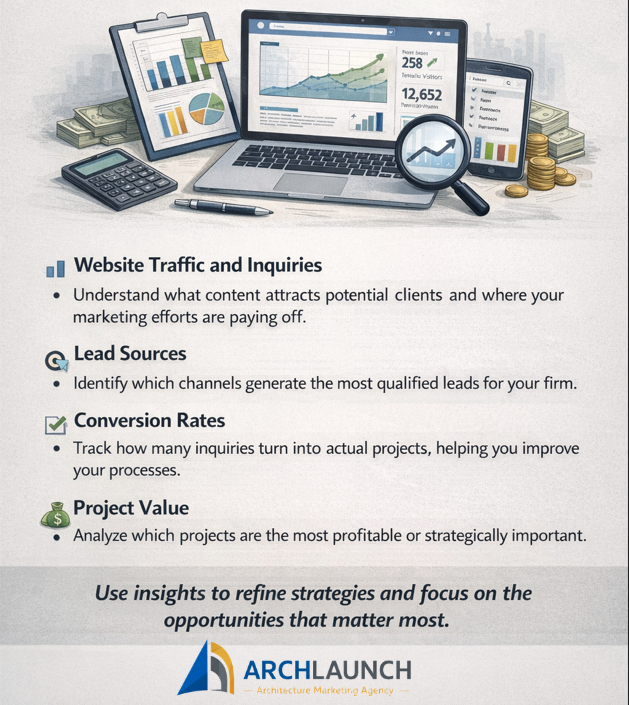
Business development shouldn’t rely on guesswork. Tracking what’s working and what isn’t can reveal patterns that help your architecture firm grow more predictably. Even simple monitoring provides insights that allow you to refine your strategies and focus on the opportunities that matter most.
Website Traffic and Inquiries
Understanding which pages attract visitors and generate inquiries shows what content resonates with potential clients and where to invest your marketing efforts.
Lead Sources
Tracking whether leads come from referrals, SEO, outreach, or partnerships helps you see which channels are most effective for your target clients.
Conversion Rates
Monitoring how many inquiries actually turn into projects highlights where your process succeeds or needs improvement, helping you focus on high-impact opportunities.
Project Value
Analyzing which projects are most profitable or strategically important ensures your team spends time on work that drives growth and strengthens your portfolio.
By paying attention to these patterns, your firm can make smarter decisions, allocate resources effectively, and build a business development approach that consistently delivers results.
Align Business Development with the Projects You Actually Want
One of the biggest mistakes firms make is chasing every opportunity. Instead, align your business development efforts with your ideal projects:
- Project size
- Budget range
- Client type
- Location
This ensures you’re not just busy, but working on projects that move your firm forward. Over time, this alignment strengthens your portfolio, improves profitability, and attracts even better opportunities.
Final Thoughts
Business development for architecture firms isn’t about quick wins or one-time tactics. It’s about building a system that consistently brings the right opportunities to your firm.
When you combine clear positioning, consistent lead generation, strong relationships, and a thoughtful conversion process, including strategies like SEO for architects to make your firm more visible online, growth becomes predictable, not accidental. The firms that invest in this now are the ones that stay busy, even when the market slows down.
If there’s one takeaway, it’s this: don’t wait until you need projects to start business development. The best time to build your pipeline is when you’re already busy, and establishing strong digital visibility ensures those future clients can find you.